Explore Karkotak Temple Trek in Nainital: Scenic Trails & Local Legends

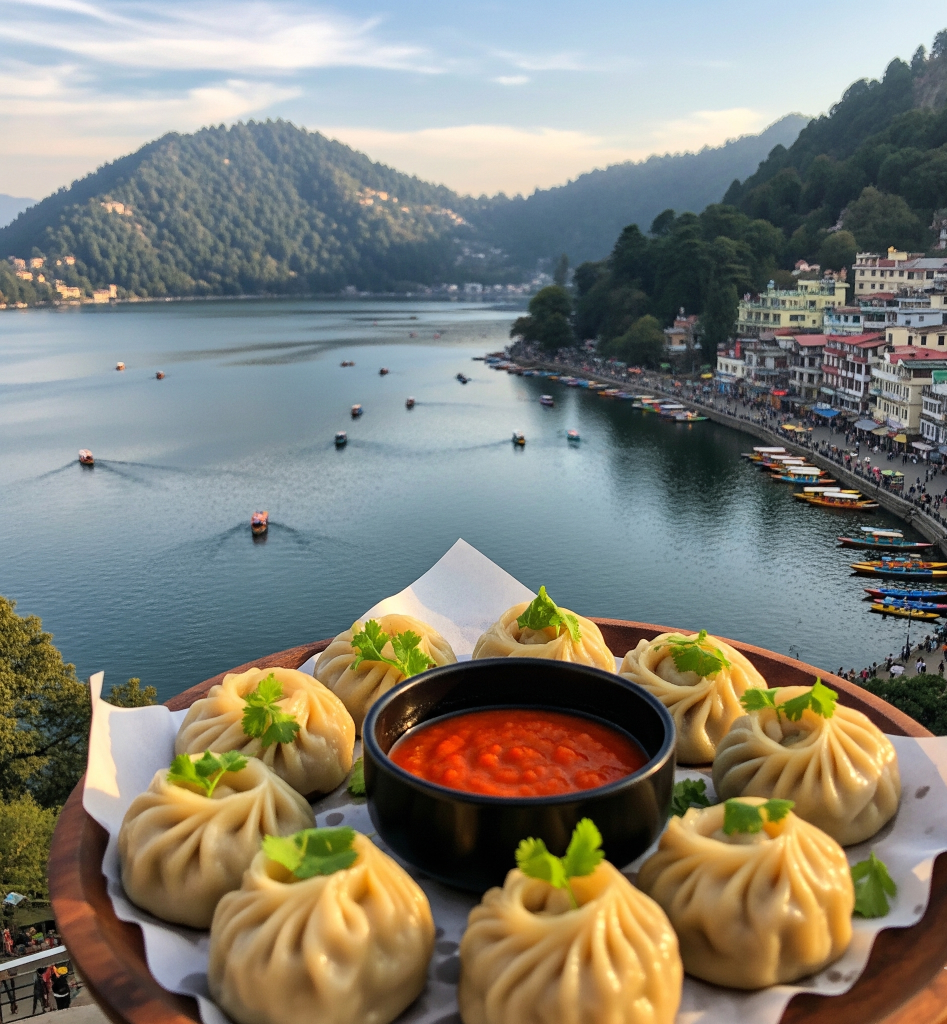
Representational Image (Gemini Generated)

If you think Nainital is just about boating on the lake and eating hot momos on Mall Road, let me spill some pahadi chai for you—there’s a secret trek that will steal your heart: Karkotak Temple Trek.

The trek begins just a short drive from Nainital town, making it the perfect escape from the touristy buzz. The path is surrounded by dense forests, chirping birds, and occasional panoramic views of the Himalayan peaks peeking through the clouds. And guess what? This trail isn’t just about the scenery—it has a story too! The Karkotak Temple is dedicated to Karkotak Naag, a revered serpent deity in Hindu mythology. Locals believe the deity protects the region, and you can feel the spiritual vibe as soon as you step inside the temple courtyard.

Image Source: Hitesh Joshi YouTube Channel

Walking here is not too challenging—perfect for beginners or anyone who wants a peaceful mountain walk. The air smells of pine and wildflowers, and you’ll find yourself humming a Bollywood track without even realizing it. Once you reach the temple, the view is spectacular—rolling valleys and glittering Nainital Lake far below. It’s the kind of place where you’ll want to click 100 photos (and maybe a dramatic hair flip video for Instagram Reels!).

For those who love local culture, talk to the villagers around—they’ll happily share legends and stories about Karkotak Naag. You might even be offered a cup of pahadi chai or fresh fruit from a nearby orchard. The best part? This trek is still under the radar, so you won’t have to elbow your way through crowds—just you, nature, and maybe a cow or two.
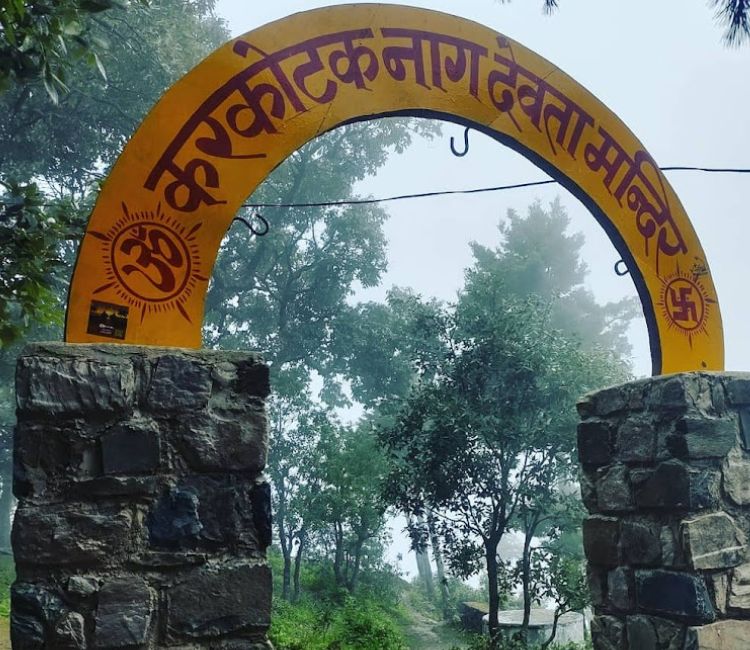
Image source: chirpinghillresort.com

So next time you’re in Nainital, skip the usual checklist and make your way to Karkotak Temple Trek. Trust me, it’s an experience that blends nature, spirituality, and a touch of filmy drama.


🌟 Quick Travel Tips for Karkotak Temple Trek

  • Best Time to Visit: March to June and September to November for pleasant weather.
  • Trek Duration: Around 2–3 hours, depending on your pace.
  • Footwear: Good walking shoes—leave the fancy heels for your Insta pics later!
  • Carry: Water, light snacks, sunscreen, and a camera.
  • How to Reach: Take a taxi or drive to the base point from Nainital town (approx. 5–6 km).
  • Local Etiquette: Respect the temple space and keep the trail clean.

FAQs about Karkotak Temple Trek, Nainital

  1. Is the trek suitable for beginners?
    Yes! It’s an easy to moderate trek, perfect even if you’re not a seasoned hiker.
  2. Is there an entry fee for Karkotak Temple?
    Nope, it’s completely free.
  3. Are guides available for the trek?
    Not usually needed, but locals can guide you if you’re unsure of the route.
  4. Can I visit during monsoon?
    It’s possible but not recommended—trails can get slippery.
  5. Are there food stalls on the way?
    Not on the trail, so carry some snacks and water.
  6. Is photography allowed at the temple?
    Yes, but be mindful of devotees and the sanctity of the place.

Pack your bags, channel your inner Bollywood star, and let Karkotak Temple Trek give you a memory you’ll never forget!
Exploring the Enchanting Sitabani Temple in Jim Corbett

The serene Sitabani Temple, located in the heart of Jim Corbett National Park, symbolizes the blend of spirituality and nature.
Image source: corbettinfo.com

In the verdant heart of the Corbett Tiger Reserve, amidst the whispers of ancient trees and the melodies of exotic birds, lies the mystical Sitabani Temple. This sacred site, nestled in the Sitabani Safari Zone of Jim Corbett National Park in Uttarakhand, India, weaves a captivating tale of spirituality, history, and wilderness. Dedicated to Goddess Sita, wife of Lord Rama, the temple is a living testament to the enduring legends of the Ramayana. As you step into this mystical realm, the serene ambiance envelops you, blending devotion with the raw beauty of nature.

Sitabani Temple holds profound significance in Hindu mythology. It’s believed that Goddess Sita stayed here during her exile, and this very place witnessed the birth of her twin sons, Luv and Kush, in the revered Valmiki Ashram. Pilgrims and travelers flock to this temple to seek blessings and immerse themselves in the spiritual history that permeates the region. The temple’s location within the Sitabani Safari Zone, part of the illustrious Jim Corbett National Park, sets it apart. Surrounded by dense forests teeming with diverse flora and fauna, the temple offers a unique fusion of pilgrimage and wildlife safari. Visitors can partake in prayers amidst tranquil surroundings while nature enthusiasts can embark on thrilling safaris to explore the Corbett Tiger Reserve.

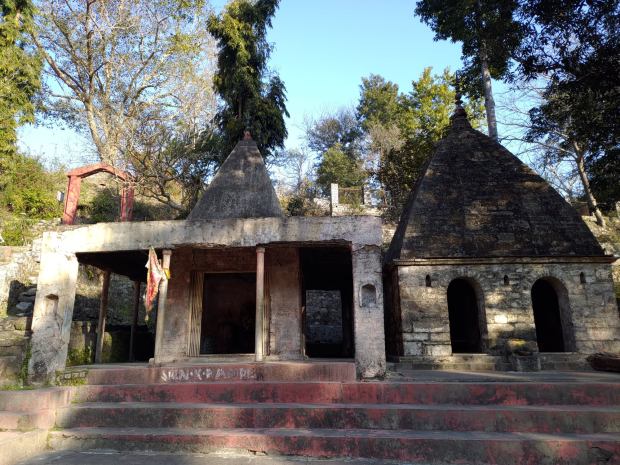
Old temple in Ramnagar, Uttarakhand, dedicated to Goddess Sita, showcasing traditional architecture amidst lush surroundings.
Image source: ASI Dehradun
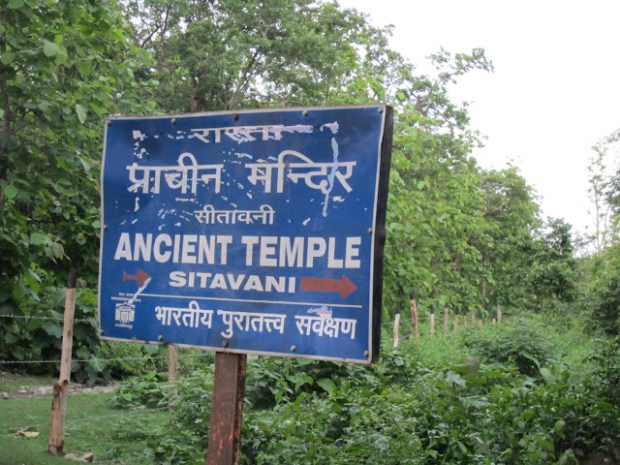
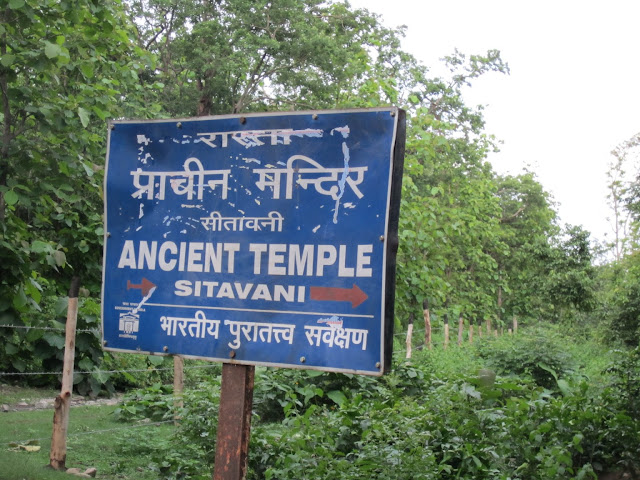
A weathered blue sign pointing to the Ancient Temple of Sitabani, surrounded by lush green vegetation in Jim Corbett National Park, India.
Signpost leading to the ancient Sitabani Temple, nestled in the lush forests of Jim Corbett National Park.
Image source: hindutemples-India.blogspot

The journey to Sitabani Temple is as enchanting as the destination itself. As you proceed through the buffer jungles of Jim Corbett, the dense forest envelops you in its wilderness, filled with the sounds of birdsong and rustling leaves. The temple, shrouded in history and isolation, is maintained by a lone priest living amidst the dense forest, adding to its authentic spiritual narrative. The architecture reflects its ancient roots, with idols of Luv and Kush adorning the sanctum alongside a Shivling. Three flowing channels and an iconic pond enhance the mystical ambiance, with warm water springs adding to the unique experience.

Sitabani Temple plays a role in promoting wildlife conservation awareness among visitors. Temple authorities conduct events and discussions on preserving the natural habitat. Surrounded by a wildlife sanctuary, visitors may encounter deer, elephants, leopards, and potentially the majestic Bengal tiger. The area is also home to various Himalayan animal species during cold months.

The location of Sitabani Temple is approximately 20 kilometers from Ramnagar, the gateway to Jim Corbett National Park. The best time to visit is from November to June for pleasant weather and frequent wildlife sightings. Entry requires permits and fees from the Sitabani Forest Department. Jeep safaris and birdwatching opportunities abound in this sanctuary, part of the Trans-Himalayan Birding Corridor.

In essence, Sitabani Temple is a harmonious blend of spirituality and nature, beckoning those seeking divine blessings and wildlife enthusiasts alike. This destination truly offers the best of both worlds, embedded in the rich tapestry of the Ramayana and the wilderness of Corbett.

A serene pond surrounded by lush greenery near Sitabani Temple in Jim Corbett National Park, India.
Image source: hindutemples-India.blogspot

Explore Vairatpattan: A Hidden Gem in Nainital

Tucked away in the picturesque Corbett City Ramnagar in Nainital district, Uttarakhand, lies the ancient city of Vairatpattan, also known as Viratnagar. Situated on the banks of the Kosi River, this historical site is a treasure trove of ancient ruins, myths, and legends. As we delve into the history of Vairatpattan, we’ll also explore its significance, architectural remnants, and the surrounding natural beauty, making it an ideal destination for history buffs and travel enthusiasts alike.

Sign marking the ancient ruins of Vairatpattan, surrounded by lush greenery in Uttarakhand.

Vairatpattan is believed to have been the capital of the ancient Govisana kingdom, a fact attested to by numerous scholars. The site gained prominence with the visit of the renowned Chinese pilgrim, Hieun Tsang, in the 7th century. This ancient city was also the winter capital of the Katyuri kingdom, according to historical records. The region was initially under the control of the Kuru dynasty, which operated with the permission of the ancient Indraprastal kingdom, present-day Delhi.

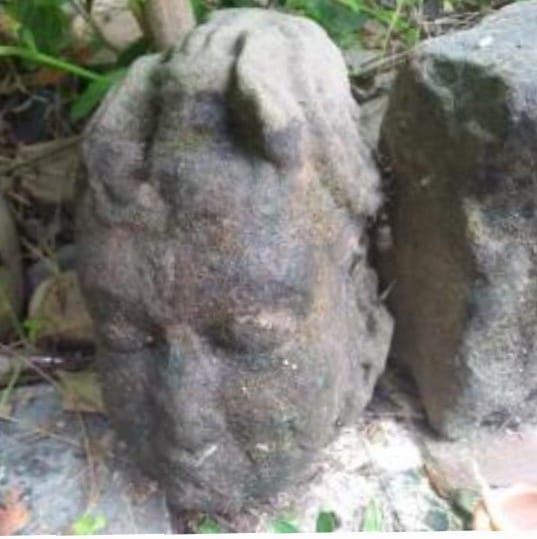
As per mythological accounts, Vairatpattan was a refuge for the Pandavas, who allegedly lived incognito in the region for a year during their exile. This mythological connection adds to the site’s historical and cultural significance. The city’s ancient name, Brahmapura, is derived from the deity Brahma, and the discovery of a bearded figure, likely Brahma, during excavations reinforces this claim.

Systematic excavations at Vairatpattan have unearthed remains of ancient monuments, temple structures, and intricately carved capitals, pillars, and medallions with Buddhist motifs. Some of the recovered artifacts were reused as architectural motifs for arches, pillars, and mantelpieces. The pillars feature foliated motifs, separated by sculptures of birds and lions. A plateau above the site boasts an ancient well, serviced by a system of canals. These findings attest to the site’s importance in history and highlight its well-planned and developed ancient infrastructure.

Ancient stone artifacts and architectural remnants from Vairatpattan, showcasing intricate carvings and historical significance.

The site is presently surrounded by a dense forest, home to tree species like sal, saj, kusum, harad, baheda, and amala. The area is also inhabited by wild elephants and Bengal tigers, making it a paradise for wildlife enthusiasts and nature lovers. The surrounding landscape offers breathtaking views of the Himalayas, making Vairatpattan an ideal destination for trekking and hiking enthusiasts.

As we explore the remnants of Vairatpattan, we’re reminded of the region’s rich cultural heritage. The site serves as a testament to the advanced architectural skills and artistic prowess of the ancient civilizations that once flourished here. Whether you’re a history buff, a travel enthusiast, or simply someone who appreciates the beauty of nature, Vairatpattan is a destination that’s sure to captivate and inspire.

Ancient stone head sculpture believed to represent a deity at Vairatpattan, showcasing the region’s rich historical and mythological heritage.

For those planning to visit Vairatpattan, the best time to explore the site is between October and March, when the weather is pleasant and ideal for trekking and sightseeing. The nearest city is Ramnagar, which offers a range of accommodation options, from budget-friendly hotels to luxury resorts. Regular bus services and taxi rentals are available from Ramnagar, making it easily accessible. However, visitors are advised to be cautious of wild animals and maintain a safe distance.

In conclusion, Vairatpattan is an ancient city that offers a unique blend of history, mythology, and natural beauty. As we uncover its secrets and explore its remnants, we’re reminded of the region’s rich cultural heritage. So, If you’re planning a trip to Corbett National Park, Vairatpattan is a must-visit site. Located just 6 km from Corbett city, this ancient city offers a unique blend of history, mythology, and natural beauty that’s sure to captivate and inspire. Take a detour from your wildlife safari and explore the remnants of Vairatpattan. Discover the ancient secrets that lie hidden in this picturesque corner of Uttarakhand.

Continue reading “Explore Vairatpattan: A Hidden Gem in Nainital”

Serenity in the Hills- Kasar Devi, Almora

Nestled in the majestic Himalayas, Kasar Devi is a hidden gem that whispers secrets of a bygone era. This ancient temple, steeped in history and mythology, is a must-visit destination for anyone seeking spiritual enlightenment and natural beauty. This 2000-year-old temple, situated on the Crank’s Ridge, also known as Hippie Hill, is one of the three places on earth that sits on the Van Allen Belt, a zone of highly energetic charged particles trapped in the Earth’s magnetic field. According to NASA, the other two places are Stonehenge in England and Machu Picchu in Peru.

As we delve into the history of Kasar Devi, we find that the temple was established by King Rudrak in the 2nd century. The temple has undergone several renovations and revivals throughout its history, yet it still stands in its original form, making it a testament to the advanced architectural skills of the ancient civilization. The temple honors the Kaushiki-Durga avatar of Goddess Parvati, who is said to have killed two demons, Shumbh-Nishumbh, on the hill of Kasar Devi. The impressions of Goddess Durga’s lion can still be seen on a rock behind the statue.

Kasar Devi is not just a historical site, but also a spiritual hub that attracts seekers from all over the world. The temple is bordered by other ancient temples, including the Shiva Temple and the Bhairava Temple, which is dedicated to Lord Shiva’s fierce form. In the 1890s, Swami Vivekananda visited Kasar Devi with a group of Western seekers, including Lama Anagarika Govinda and Sunyata Baba Alfred Sorensen. This influx of spiritual seekers has contributed to the site’s mystique, making it a place of great spiritual significance.

The 1960s saw a surge in popularity of Kasar Devi, thanks to the visit of Timothy Leary, who dubbed the site “Hippie Hill.” The hippies who flocked to the site experimented with alternative lifestyles. Today, Kasar Devi is a place of great natural beauty, with breathtaking views of the surrounding mountains and valleys. The site is surrounded by dense forests, home to a variety of flora and fauna, making it a paradise for nature lovers and trekkers.

As we explore the site, we can feel the positive energy that pervades the air. The temple, with its ancient architecture and spiritual significance, is a place of great peace and serenity. The surrounding natural beauty, with its breathtaking views and dense forests, makes Kasar Devi a must-visit destination for anyone seeking mental peace and tranquility.

Kasar Devi is a place of great historical, spiritual, and natural significance, makes it a must-visit destination for anyone seeking mental peace and tranquility. So come and experience the mystique of Kasar Devi for yourself.

Unraveling the Mystique of Uttarakhand’s Hidden Gem: Jagannath (Srikhetra) Temple, Uttarkashi

Image Credit Source: etvbharat.news.in

Uttarakhand, a land of unparalleled beauty and spiritual significance, has been aptly dubbed “Devbhoomi” or the “Land of the Gods” in ancient Puranic texts. This enchanting Himalayan state is replete with mesmerizing hill stations, sacred pilgrimages, and a rich cultural heritage. The state is broadly divided into two regions: Kumaon and Garhwal.

In this blog, we will embark on a journey to explore a lesser-known gem in Uttarakhand, the Jagannath Temple. As we pose the question, “Do you know where the Jagannath Temple is situated?” most of us would instinctively respond with “Puri, Odisha.” And while that is correct, there exists another Jagannath Temple, nestled in the picturesque Sald Village near Uttarkashi District, Uttarakhand.

This temple, situated at an altitude of approximately 3000 feet above sea level, is one of the oldest temples dedicated to Lord Jagannath. Interestingly, the deity is worshipped here in the form of a black stone with seven streaks on it, distinct from other temples. The temple’s history dates back to the 12th century, and its construction is steeped in local legend.

According to a local resident and researcher, a Brahmin man from the Nautiyal community, a resident of Saald, had travelled to Puri in search of Lord Jagannath’s blessings. The Lord, moved by the man’s devotion, appeared before him and promised to bless him with a child, but with the condition that the child would stay with him for only 11 years. The man, overjoyed at the prospect of fatherhood, returned home, and soon, his wife gave birth to a child.

However, as fate would have it, the child vanished while playing in the fields, leaving the parents heartbroken. Years later, a farmer, while ploughing the fields, heard a voice from the ground, warning him to stop. Ignoring the warning, the farmer continued to plough the field, and in the process, disturbed the sanctity of the site. As a consequence, he was attacked by bees, and soon, Lord Jagannath appeared before him in the form of a black stone with seven streaks.

The idol was later installed in the temple, which has since become a revered site for the locals. The Jagannath Temple, though lesser-known, holds significant cultural and historical importance. Its unique idol, steeped in mythology and legend, is a testament to the region’s rich cultural heritage. The temple’s discovery has been attributed to Odia actor couple Sabyasachi Mishra and Archita Sahu, who visited the temple and shared their experience on social media.

Their initiative has helped raise awareness about the temple’s existence and significance, attracting tourists and devotees alike. As we delve deeper into the temple’s history and mythology, we are reminded of the importance of preserving our cultural traditions and heritage sites. The Jagannath Temple, situated in the heart of Uttarakhand, is a shining example of the state’s rich cultural diversity and spiritual significance.

For those seeking to explore the uncharted territories of Uttarakhand, the Jagannath Temple is a must-visit destination, offering a glimpse into the region’s fascinating history, mythology, and culture. The temple’s rituals and traditions, including the worship of Lord Jagannath on Wednesdays and Sundays, and the offering of rice to the Lord, are a testament to the region’s rich cultural heritage.

The Jagannath Temple, situated in the picturesque Sald Village near Uttarkashi District, Uttarakhand, is a hidden gem waiting to be explored. This ancient temple, steeped in history, mythology, and legend, is a testament to the region’s rich cultural heritage and spiritual significance.

References/sources
https://Timesofindia.indiatimes.com/city/bhubaneswar/actor-couple-bring-ancient-jagannath-temple-of-uttarkashi-into-limelight.
https://odishatv.in/news/odisha/jagannath-temple-in-uttarkashi-to-be-revived-as-religious-tourist-destination:dharmendra-pradhan.
https://kalingatv.com/features/ollywood-fame-sabyasachi-mishra-discovers-hidden-lord-jagannath-temple-in-uttarkashi.

•https://www.etvbharat.com/amp/english/national/state/uttarakhand/the-legend-behind-uttarkashis-ancient-lord-jagannath-temple/na20200624172702049